
Home · Services · Steep-street moves
The lead job · Awaba, Stanton, Botanic, Mandolong and the rest of the grid
Steep-street home moves in Balmoral
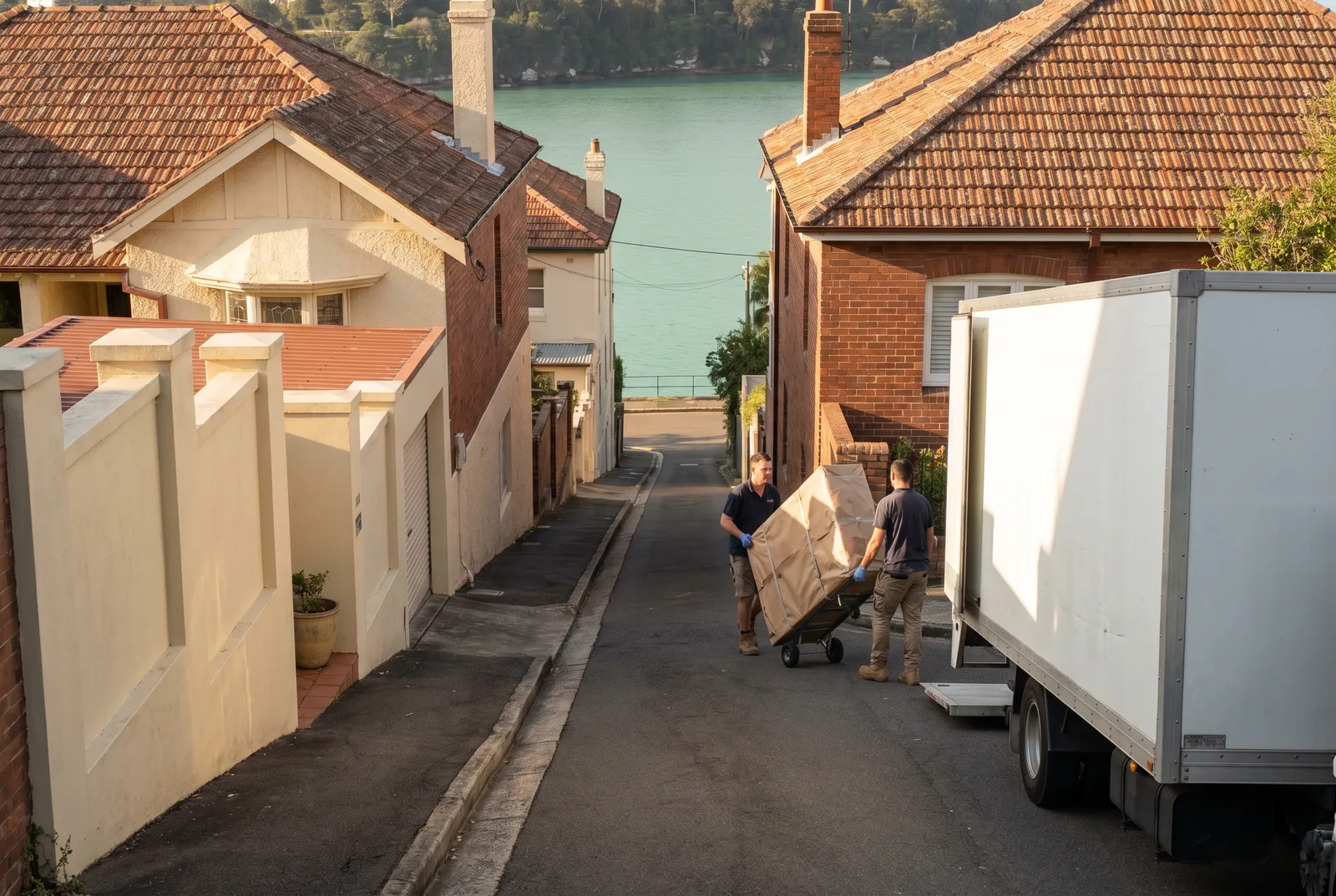
On a street that climbs like Awaba, the move is won or lost before the first carton is lifted. Where the truck stands, which way it faces and which side the carry runs decide the whole day, so that's where we start.
Why the standing position comes first
A loaded truck on a 30% pitch is a problem you can't fix mid-move. The tailgate needs level ground to run safely, the ramp angle changes what two people can carry, and a truck that has to leave and re-park mid-job burns your hours, not ours.
So before we quote a street on the steep grid, we work out the standing plan: crest or landing, wheels chocked, approach from the ridge side so the truck arrives at the top of your street rather than climbing it loaded. You'll hear the plan on your callback, street by name.
The method
How a steep-street move runs
1 · Stand high, face the carry
The truck takes the crest or the nearest flat landing, tailgate pointed at the shortest safe walking line to your door. Chocks down before the doors open.
2 · Carry down, not up
Loaded legs run downhill wherever the geometry allows, even when the downhill route looks longer. Gravity works for the crew on the way to the truck, and empty hands do the climbing.
3 · Wrap everything, stage at the tailgate
Every piece is blanket-wrapped at the door because every piece gets carried further here than on a flat street. Furniture stages at the tailgate so the truck packs tight and once.
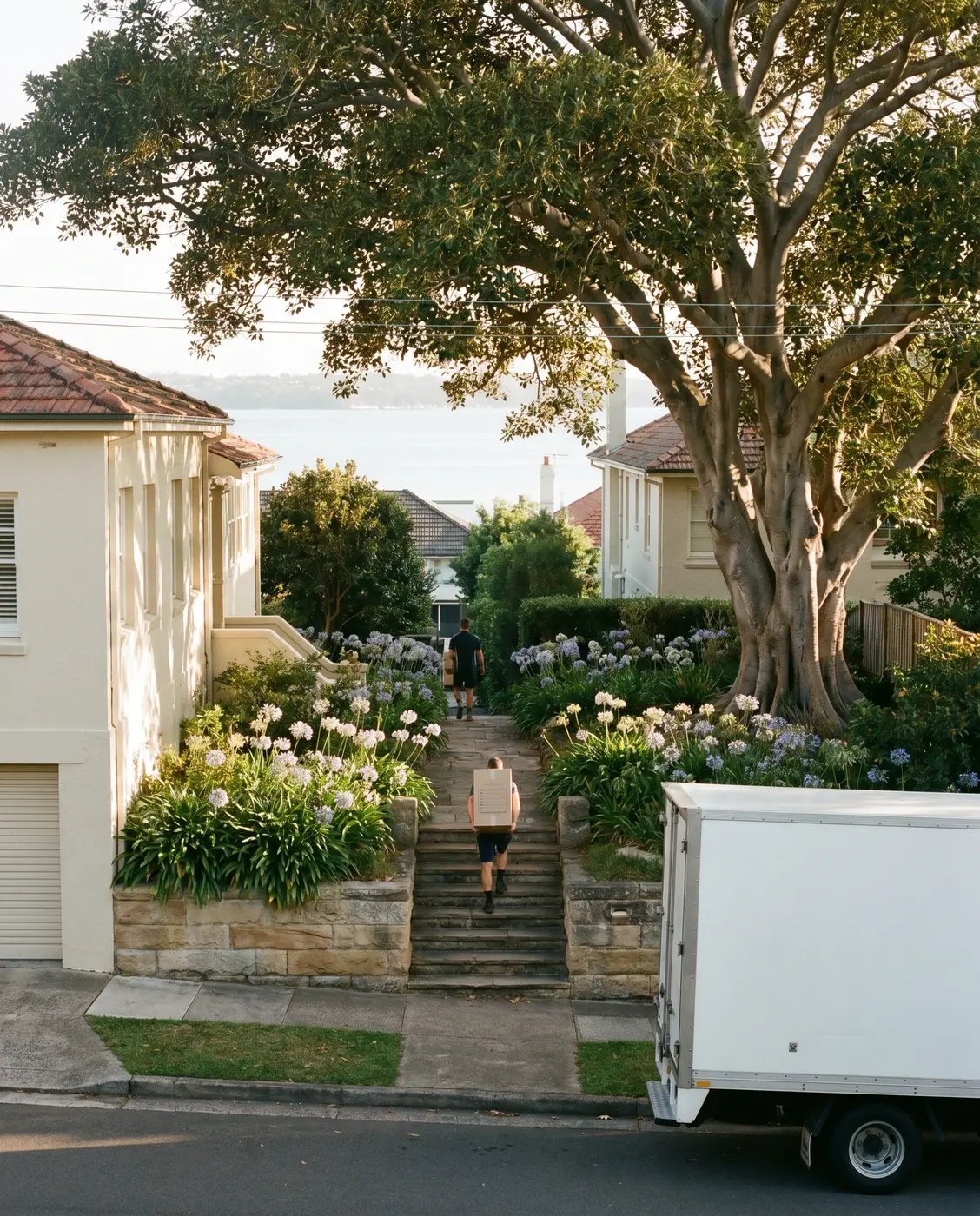
Garden stairs, counted honestly
Half the homes on the slope don't start at the kerb: they start forty sandstone steps above or below it. Those steps change the hours more than the furniture does, which is why the enquiry form asks about them up front.
Tell us roughly what sits between your front door and the street: steps, landings, a shared path, a driveway too steep for the trolley. We fold it into the hours we quote, and the quote survives contact with your street.
- Long stair runs get a staged carry: two shorter legs beat one heroic one
- Trolley legs and carry legs are planned separately; a trolley on a 30% drive is not a plan
- Wet-weather calls made early: sandstone steps and rain get respected, not risked
What it costs
The crew for a slope-street house
Most 2–3 bed homes on the grid run best with 3 movers + 1 truck at $350/hr. Bigger homes step up to 4 movers + 2 trucks at $500/hr. The extra hands matter more on a hill; the carry legs are longer, so the crew splits into a carry team and a load team instead of walking single file.
What drives the hours on a steep street · The truck-standing guide in full